1. souse, n.5: 3. A drunkard. slang (chiefly U.S.). (OED)
  2. white souse, n.1: A blog for literature, politics, science, and the occasional cocktail.

Wednesday, June 4, 2008

Sex in the City Review, or, How to Lose a Guy in 2 1/2 hours


Last night, in a bid for canonization, I cooked dinner for Meg and offered to take her out to see Sex in the City. I figured it was the only way I'd be able to drag her to the new Indiana flick as well as the remaining Comic book releases of the season. I even promised to be polite, avoid comments, and not dog it afterwards. That's what the blog's for. This was *very* generous -- I'd heard that the movie was 2 1/2 hours long, and I despised the show -- watching it would occasionally spark homicidal fits of gibbering rage that may have ended at least one friendship. But I digress.

Here is where I should put "spoiler alert" -- but since that implies something fresh and capable of ruin, it's unnecessary. Of more interest anyway was the crowd. Hordes of young and older women, dolled up for a sweltering Houston Tuesday, many clearly tipsy (cosmos perhaps?). Their reactions made the movie for me: when wooden Mr. Big walks out on the wedding, widespread sobbing ensued; when Carrie pulls out a Prada box to give to her aspirational blackssistant, there were widespread squeals of delight.

And I laughed several times. Anthony Lane's blistering review is unfair in noting that

No self-respecting maker of soft erotica would countenance such shots, and, as for the matching dialogue (“Something just came up,” Samantha murmurs over the phone, as her boyfriend stands beside her in bulging briefs), it’s a straight lift from flaccid, mid-period James Bond. In a daring plot development, she buys a dog the size of a child’s slipper; the camera keeps cutting away to it, and guess what—the pooch screws, too! Mirth is unconfined.


Flaccid is what MADE 70's bond. The whole point is that there was little virile about Roger "I'm too bloody old for this shit" Moore (who didn't think Grace Jones would rip him to shreds?). I loved the dick and shit humor of Sex in the City -- given a few more years of New World accounts Shakespeare would have surely worked Montezuma's revenge into Comedy of Errors II: Dromios^2. I don't care if it was a bone for me and the other five guys in the audience.

But there were two interrelated points of interest for me in the movie -- elements that made it more interesting than the original show. First, there was the reduced authority of Carrie's voice-overs. In the show, Carrie, as columnist, pontificates with abandon about the social and sartorial foibles of Manhattanites and her friends. But in the movie, she's uncertain, worried about the course of her relationship, and coming to grips with being forty -- no longer the girlish lounge visitor that launched the show. Her incessant critiques of others become troubled examinations of her own life.

And bound up with this re-examination is the movie's own unease with its materialism. It's still filled with bags, boxes, and baubles, of course. Half of the plot involves shipping Carrie's clothes between homes and figuring out how to store her massive shoe collection. But the film makes a strong effort to note the intangibility of these objects, which ironically help wreck her first ceremony with Big. It even concludes with a diatribe against "labels" man/wife, movie/farce. Yet despite the insisted difference between bride and lover, ultimately Carrie still finds comedic resolution in marriage, if for no clear reason (as she and Big agree, they were happier before all the marriage fuss).

This shoehorn marriage marks how the movie is torn, I think, between the need to feed the audience the show created and the desire to reflect on what shape that monster finally takes. (Imagine the trebling roars of outrage if Carrie and Big and gone their single ways.***) It is possible to defend glorifying a $1000 purse and convincing an audience they need to have it -- The Devil Wears Prada made a good pitch -- but it's sure as hell not easy. The show offered a one-two punch that was intoxicating -- sexual liberation with a hefty designer price. Love is passed along in the movie as a gold-plated "Love" keychain (rich metaphorics here). The movie tries to separate love and fashion (one of the characters fails to shop her way out of a failing relationship) but it ultimately fails. In the final scene, the girls gather again in a flashy lounge in the meatpacking district to reflect on their romantic fortunes, sipping Cosmos that would probably cost $20 a pop, ensconced in their haute couture. The final shot -- eerily reminiscent of the casualty shot from Gone with the Wind -- pans back and away, over the lounge crowded with similarly clad covens, and then out onto the street where women trip along in designer shoes, designer bags, designer clothes. They could have been panning over the audience in the theater (and obviously that was the point). But after all the anxiety the movie seems to express for the legacy of Sex in the City -- it felt oddly haunting, not Glamorous.


*** Meg strongly disagreed with me on this one -- she thinks the audience would have been fine without the marriage. But if ever there was a target demographic for the romantic comedy ...

Read more of "Sex in the City Review, or, How to Lose a Guy in 2 1/2 hours"

Mr. Culberson goes to Houston

I participated in a "town hall" teleconference last night with John Culberson -- my Republican representative of the 7th congressional district here in H-town. I'm assuming the other participants ended up there the the same way I did -- naively answering the home phone while putting the finishing touches on some Kung Pao chicken. And it was interesting to listen to my lackluster rep -- he resonates with the kind of aw-shucks commonsense that carries a Republican far down here in Texas.

He then talked about killing hundreds of earmarks and saving them for essential technologies like "nano-sponges" that can cure preemies of various diseases before they're born (note that the Houston Medical Center is in the 7th), and building a retaining pond to mitigate flooding elsewhere in the district. These seem like fine candidates for federal spending, but it seems that the key to Culbernomics is that Congress needs to slash pork in order to save our precious spending for *his* pork. (He went on note the other key crisis facing the United States today -- one which merits full attention. Not the war, not the economy, not energy prices, not the environment -- not even health care for the Med center rep -- but Illegal Immigrants. As he put it: "when the dam breaks and you're flooded, first you've got to plug the hole, then figure out what do with all the water." Aw shucks -- water/wetbacks? Now that's folk humor.)

His bottom line: the government is heavily in debt and can only afford to pay for the bare necessities. As he put it, his young daughter, as well as everyone else in the U. S., has a 100 thousand dollar-plus share of the national debt. And just like having debt on a credit card, the first thing you've got to do is stop spending money and then figure out how to pay down the debt. It makes so much darn sense.

But this triggered a more substantive question for me: why is it that in that in national politics, debt is considered bad? In business, I understand, a company is considered insufficiently leveraged when they don't carry a portion of debt in order to expand their capital and their business operations. And in household economy, I don't know many who are frowned upon for carrying a mortgage and making car payments. In fact, and investment counselor once told me that if I was 100 thousand in debt on my house, and received a 100 thousand dollar windfall, that I *shouldn't* pay the mortgage off -- that I should invest it intelligently instead. And not just because the rate of return might exceed the mortgage, but because it would diversify my resources and increase my long-term financial security.

What I take from this is some amount of national debt must be good. And yet I don't think I've ever heard this from a politician, or in broadcast commentary. What I'd like to hear is a discussion of how much debt the U. S. can and should carry. What are the trade-offs? What does this debt do for us (beyond propping up the dollar via China)?

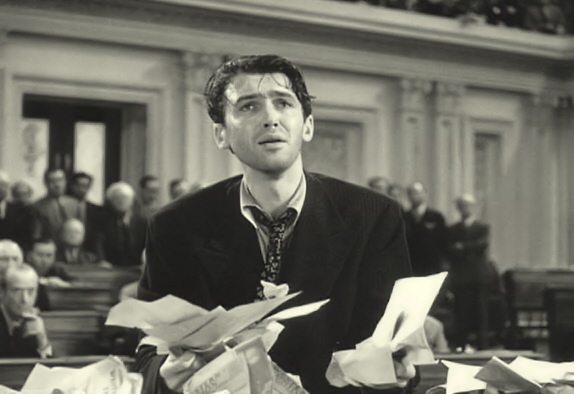
Because these aw-shucks common sense arguments obscure more than they illuminate. Economists don't talk in parables (not even Greenspan). What "aw-shucks" means is "I am a rube -- rube with me." Our collective yearning for a Jimmy Stewartesque simplicity to politics and diplomacy is what got us in to this pig fuck with Bush in the first place. I don't want a president or a congressman I can have beer with or watch ball with. I have friends for that. What I want is a smart asshole who knows more than me and isn't afraid to say so.

Read more of "Mr. Culberson goes to Houston"

Obama wins the nomination

A year and a half ago my friends and family were asking me if I *really* thought it was possible for a black man to become president. And I kept saying I thought he could -- that if you see him in person and listen to his words, you'd be converted, too. Most ended up voting for him in the primary. Tonight it's clear that it's much more than a possibility that he'll become president. And it makes me so proud.

Read more of "Obama wins the nomination"

Tuesday, June 3, 2008

Raiders of the Lost Ark: The Remake

When I was eight, me and a friend of mine, Mike, were so obsessed with Wierd Science that we made our own version of the audio track with a cassette recorder (Gimme de keys! Gimme de keys!). Which is why I was mesmerized by this Vanity Fair article about two kids from LA who spent ten years -- their entire teens -- reshooting Raiders of the Lost Ark scene by scene and shot by shot. The guys who made it lost it for ten years before it resurfaced (*cough* at the Alamo Draft House in Austin). Read the article -- it's simply incredible. I'm of half a mind to jump on a plane to Nashville so I can catch a screening. But don't take my word for it -- see for yourself.

Read more of "Raiders of the Lost Ark: The Remake"

Amazo Edition: Now, with Humor!

Watch Dana Milbank of the Washington Post work the Daily Show angle -- with all the grace of a dancing bear.


Summary: "Keep Milbank milbank for Milbanks!"

Read more of "Amazo Edition: Now, with Humor!"

The Clinton Legacy

It looks like today Barack Obama will *finally* be able to announce victory in the Democratic primary. And it feels like a hell of a long time coming. Chris Cillizza argues that Obama, in derailing Hillary's enormous early financial and political advantages, has pulled off "The Biggest Political Upset Ever" -- and from my limited knowledge of politics I'd agree.

But we'll have plenty more time to hash out Obama's strengths and the merits of his hagiography as his campaign continues forward. What I'm thinking about today is how this will affect the Clinton legacy. With his careless campaigning in North Carolina and his often intemperate remarks (not to mention Todd Purdam's racy article from Vanity Fair -- "Air Fuck One"!?!, now that's the premise for a movie), Bill Clinton's Political Chosen One glow has clearly lost wattage. But I'm not ready to sign on with Richard Cohen's evaluation of Hillary Clinton. Yes, I was often much pissed off by her tactics, but Cohen says he "loathe[s]"

what Hillary Clinton has done to herself. The incessant exaggerations, the cheap shots, the flights into hallucinatory history -- that sniper fire in Bosnia, for instance -- have turned her into a caricature of what her caricaturists long claimed she already was. In this campaign, Clinton has managed to come across as a hungry hack, a Janus looking both forward and backward and seeming to stand for nothing except winning. This, too, is sad.

I'm not sure if this is just Cohen blacking the kettle evenly (what's the reverse of gilding the lilly?) -- he dishes out a heaping helping of sanctimonious scorn to all the campaigns (always the bravest bet in an op ed.). But I don't think this will be how Hillary's campaign is seen a year hence. As Cohen argues in an earlier, truer passage of his column, the most painful aspect of this campaign has been "the resurgence of racism -- or maybe it is merely [his] appreciation of the fact that it is wider and deeper than [he] thought." And insofar as racism, as a legacy woven into the original pattern of our nation, continues to shape today's social fabric, it is inevitable that racism emerges in flashes from any political contest featuring a black man and a white person. When Hillary, in a particularly egregious example, offhandedly made her case to an editorial board that she retains support among "white Americans," I was angry. But I didn't imagine she was subtly spinning her comments for a racist demographic. To think or talk of "Black America" necessarily evokes White America, and to run against a black man forces you to remember that you are not only a woman, but a white woman. I say remember, because at some level white identity as well as black identity remain defined and circumscribed by each other in ways that are unique to America -- I think it's only white America that manages to forget that for periods of time. I may be bloviating, but I think this is true.

What does this have to do with Hillary's campaign? At the end of the day, I think it's clear that Hillary would never try to orchestrate a racist campaign -- and she's justifiably pissed that some think she has. But as much as we may hate it, racism -- evaluating things in terms of race or ethnicity -- remains essential to who we are as Americans (indeed, probably as humans). And sometimes -- particularly if we are married to the "first black president" -- we forget. This campaign necessarily handed us an opportunity to confront this fact again, so that we could work to effect a better change in that basic nature -- making its presence less insidious, making its judgments less execrable. It's hard to imagine what it would feel like to be a citizen of a color-blind America. It's a vision you can't just legislate, as France found out recently during the Parisian riots. But it's equally clear that we've made huge advances in 150 years, even if the last twenty have been particularly disheartening.

As this campaign moves into the general election, and Hillary begins to campaign for Obama (tirelessly and fiercely, I expect) we're going to see what actual racist campaigning looks like. Not from McCain himself, but from surrogates and third parties who want to play up fear of a jingoist chimera: The radical Black Arab terrorist representing the Islamofascist-Marxist party's Manchurian candidate. (I listen to Rush when I can -- know thy enemy -- and yes, it's just that incomprehensible.) While he'll decry it, McCain has already stamped this campaign with his unofficial imprimatur by arguing that Obama is the candidate of Hamas.

Remember, while Clinton didn't really receive more votes that Obama, she's second to him on the list of the most votes for a candidate in a contested Democratic primary ever. She's actually run a hell of a campaign, albeit with some slip-ups. She was swamped by a movement, not a gaffe, or "mis-remembering," or an SNL skit. And looking back a year from now, as Obama rounds out his first hundred days, what we'll remember, I think, is how fiercely Clinton fought for her party, how bumbling her hubby was, and how happy we're not chained to the sinking wreck of the G. O. P.

Read more of "The Clinton Legacy"

Thursday, May 29, 2008

PIG IN A PIT


After a teaching hiatus I'm back and working and looking forward to posting that's a bit more regular than biennial. The exciting news: me and some friends are getting together to roast a whole pig on the beach. Photos and grisly details to follow.

Read more of "PIG IN A PIT"

Thursday, July 12, 2007

The Whaling Code

Here's something interesting from Melville, the statutes of whalers:

I. A Fast-Fish belongs to the party fast to it.
II. A Loose-Fish is fair game for anybody who can soonest catch it.

There is some discussion of how these vague rules are to be interpreted as they pertain to whales in particular, but Melville characteristically broadens the scope of the concept to a profounder level:

"...these two laws touching Fast-Fish and Loose-Fish, I say, will, on reflection, be found the fundamentals of all human jurisprudence; for notwithstanding its complicated tracery of sculpture, the Temple of the Law, like the Temple of the Philistines, has but two props to stand on.
"Is it not a saying in every one's mouth, Possession is half the law: that is, regardless of how the thing came into possession? But often possession is the whole of the law. What are the sinews and souls of Russian serfs and Republican slaves but Fast-Fish, whereof possession is the whole of the law? What to the rapacious landlord is the widow's last mite but a Fast-Fish? What is yonder undetected villain's marble mansion with a door-plate for a waif; what is that but a Fast-Fish? What is the ruinous discount which Mordecai, the broker, gets from poor Woebegone, the bankrupt, on a loan to keep Woebegone's family from starvation; what is that ruinous discount but a Fast-Fish? What is the Archbishop of Savesoul's income of £100,000 seized from the scant bread and cheese of hundreds of thousands of broken-back laborers (all sure of heaven without any of Savesoul's help) what is that globular 100,000 but a Fast-Fish? What are the Duke of Dunder's hereditary towns and hamlets but Fast-Fish? What to that redoubted harpooner, John Bull, is poor Ireland but a Fast-Fish? What to that apostolic lancer, Brother Jonathan, is Texas but a Fast-Fish? And concerning all these, is not Possession the whole of the law?
"But if the doctrine of Fast-Fish be pretty generally applicable, the kindred doctrine of Loose-Fish is still more widely so. That is internationally and universally applicable.
"What was America in 1492 but a Loose-Fish, in which Columbus struck the Spanish standard by way of waifing it for his royal master and mistress? What was Poland to the Czar? What Greece to the Turk? What India to England? What at last will Mexico be to the United States? All Loose-Fish.
"What are the Rights of Man and the Liberties of the World but Loose-Fish? What all men's minds and opinions but Loose-Fish? What is the principle of religious belief in them but a Loose-Fish? What to the ostentatious smuggling verbalists are the thoughts of thinkers but Loose-Fish? What is the great globe itself but a Loose-Fish? And what are you, reader, but a Loose-Fish and a Fast-Fish, too?"

Melville, of course, leaves the payoff for the last paragraph, which I find the most penetrating and curiously applicable to today's situation. In fact, I felt haunted by this voice from the past as I read it for the first time, haunted because amidst Moby-Dick's overwrought archaisms this note rang strangely familiar. Wasn't Iraq a Loose-Fish? Are we going to behead it, like a whale, drain it of its oil, and then burn or dump the remainder overboard?

Read more of "The Whaling Code"